Your dog sheds like it’s shedding season 365 days a year. You’ve tried rubber gloves, bristle brushes, even that fancy deshedding tool you saw on Instagram. Yet mats keep forming, skin gets irritated, and your pet starts hiding when they hear the brush come out. Here’s the hard truth: most pet owners are using the wrong tool for the job. Slicker brushes for pets aren’t just another grooming gadget—they’re the backbone of professional coat maintenance when used correctly.
Why Your Current Brush Fails (And What It’s Really Doing to Your Pet)
Standard bristle brushes glide over the surface. They look gentle—but they’re useless against undercoat buildup. Think about it: double-coated breeds like Huskies or Golden Retrievers aren’t just shedding hair. They’re trapping dead undercoat next to live follicles. That creates mats. Mats pull. Pulling hurts. And pain makes pets resistant—sometimes aggressive.
And here’s what nobody tells you: improper brushing actually damages the skin barrier. Repeated surface-level strokes spread natural oils unevenly, dry out the epidermis, and worsen dander. It’s not cleanliness—it’s compounding neglect with good intentions.
How to Use Slicker Brushes for Pets Like a Pro Groomer
Forget “brush in the direction of hair growth” as your only rule. Real slicker technique is multidimensional. Precision matters more than pressure.
Step 1: Choose the Right Pin Density
Fine pins for silky coats (Shih Tzus, Maltese). Medium for medium-density fur (Cocker Spaniels, Beagles). Coarse, widely spaced pins for thick double coats (Samoyeds, German Shepherds). Wrong density = skipped undercoat or micro-tears in the skin.
Step 2: Angle Is Everything
Hold the brush at a 45-degree angle—not flat against the skin. This lets pins penetrate just deep enough to lift dead hair without jabbing live tissue. Too steep? You’re poking. Too shallow? You’re polishing lint.
Step 3: Work in Sections—Not Strokes
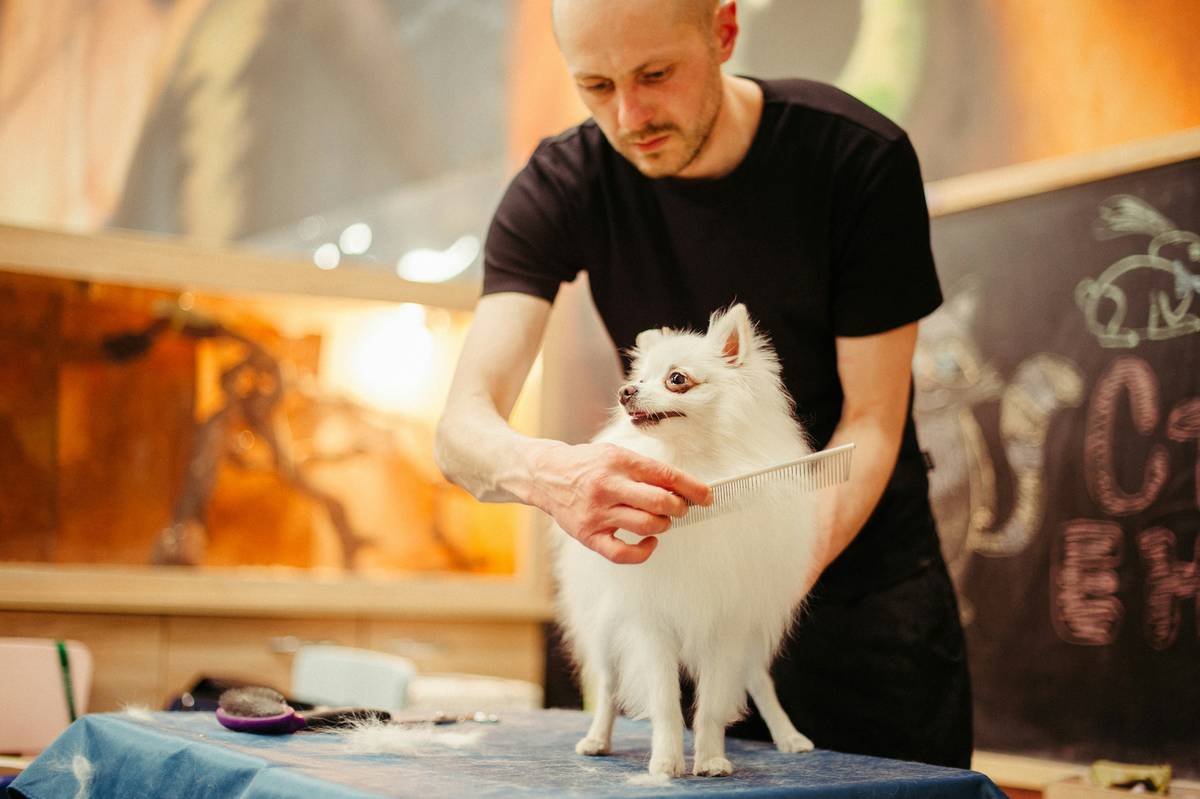
Divide the coat into palm-sized zones. Start from the tail, move toward the head. Lift each section gently. Brush downward, then upward in quick flicks to release trapped debris. Never yank through tangles. If it resists, use your fingers first—then the slicker.
| Coat Type | Recommended Slicker Brush | Frequency | Mistake to Avoid |
|---|---|---|---|
| Short & Smooth (Boxer, Dachshund) | Fine-pin slicker with cushioned pad | Once weekly | Over-brushing—leads to static and irritation |
| Medium & Wavy (Retrievers, Spaniels) | Medium-pin stainless steel | 2–3 times/week | Skipping the undercoat during shedding season |
| Long & Double-Coated (Huskies, Collies) | Extra-long coarse pins with bent tips | Daily in peak shed; 3x/week otherwise | Brushing wet fur—causes breakage and matting |
Step 4: Post-Brush Validation
Run your hand backward through the coat. Feel for hidden mats near the legs, belly, and behind ears. If it snags—even slightly—you missed a layer. Go back. Better five extra minutes now than a $120 dematting session later.

The Industry Secret: Groomers Don’t Just Brush—They Diagnose
Top-tier groomers treat every brushing session as a full-body scan. Red patches? Hot spots brewing. Excess oil at the base of the tail? Possible anal gland issue. Flea dirt disguised as soil? Early infestation. Slicker brushes for pets reveal what eyes miss because they interact directly with the dermal microenvironment. One veteran I spoke with calls it “tactile triage.” You’re not just removing hair—you’re collecting data. Ignore that, and you’re grooming blind. And blind grooming risks infection, stress, and irreversible coat damage.
Frequently Asked Questions
Are slicker brushes safe for puppies?
Yes—if you choose fine pins and use feather-light pressure. Start with 2-minute sessions to build tolerance.
Can slicker brushes remove fleas?
Not reliably. They might dislodge adults, but eggs and larvae stay embedded. Use a flea comb post-slicker for actual pest control.
Why does my pet’s coat look dull after using a slicker brush?
Overuse strips natural oils. Limit sessions to what your pet’s coat type needs—and always finish with a boar-bristle polish stroke.